
Lock Pick Basics: How to Pick a Lock (Beginner Friendly Guide)
If your here, it's because you want to know more about how to pick a lock, if this is because you find yourself locked out right this second, skip to the below section called "How to use your lock picks" below. If your trying to understand more about how to pick a lock in case you ever need to use the information, then lets get into it!
check out our tip card if you want a waterproof instruction card that can fit into your wallet and explain how to pick a lock!

But First: How Pin Tumbler Locks Work
Most residential door locks and many padlocks use a pin tumbler lock mechanism. Understanding how this mechanism works makes lock picking much easier to learn.
Inside the lock cylinder are several pairs of pins. Each pair consists of a key pin and a driver pin. These pins are held in place by small springs.
When the correct key is inserted into the lock, the grooves on the key lift each pin pair so that the gap between the key pin and driver pin lines up with a point called the shear line.
Once all the pins align at the shear line, the lock cylinder can rotate and the lock opens.
When no key is present, the driver pins extend across the shear line, blocking the cylinder from turning.
Lock picking works by manually lifting each pin until it reaches the correct height so the shear line becomes aligned. When enough pins are set properly, the plug rotates and the lock opens.

How to Pick a Lock Basics : Types of Lock Picks
For picking standard locks (Pin tumbler locks) there are three types of tools:
1. Rakes - used to scrub locks
2. Hooks - used for single pin picking
3. The Tension Wrench
LOCK PICK RAKE
Rakes are the opposite of the hook. They are usually odd looking and are designed with several humps and bumps that help manipulate as many pins as possible in the shortest amount of time. This makes them ideal for raking where you rapidly and randomly pull them across the pins with the goal of setting multiple pins at once. Below you can find information on how to utilize a rake inside a lock.

LOCK PICK HOOKS
Hooks are narrow and pointy lock picks that are able to pinpoint and locate precise positions within the lock. This precision makes them ideal for single pin picking where you are required to locate and manipulate one pin at a time. Below you can find information on how to utilize a Hook within a lock.

LOCK PICK TENSION WRENCHES
The tensioning tool (or commonly called tension wrench) is used to apply torque to the lock and bind the pins. Without this tool, picking a lock is impossible. Below you can find information on how to use your tension wrench.

Why Lock Picking Works
Many beginners wonder how a lock can open without the key. The answer comes down to small manufacturing tolerances inside the lock.
No lock is perfectly symmetrical. When tension is applied to the lock cylinder using a tension wrench, one pin will bind slightly before the others.
This binding pin becomes easier to identify when using a pick. By lifting that pin until it reaches the shear line, it becomes set in place.
Once that pin is set, another pin will begin to bind. The process continues until all pins align properly.
This is why lock picking requires both light tension and careful pin manipulation.
How to use your Lock Picks
LOCK PICK TENSION WRENCHES
placing the tension wrench into the bottom of the keyway and applying a very light degree of force ( something similar to the amount of force that it takes to press a key on your keyboard ) in the direction that the key would turn to disengage the lock, typically clockwise. The next step is to find the first binding pin and push it above the shear line to begin opening the lock.
Once you've found the pin that is more difficult to lift, gently lift it and you will feel a very slight rotation of the lock or hear a light "click" usually indicating you've successfully set a pin. Now the lock is binding on the next pin, you must locate it (being the harder pin to lift) and continue setting them until you've found and lifted all the pins in the lock, at this point the lock will fully rotate and open.

HOW TO RAKE A LOCK
Using the rake is an excellent method for inexperienced individuals as it has the most "luck" involved, and less skill, and is often a very quick method. (though skill is a factor it is very beginner friendly)

apply tension using your tension wrench. Insert your rake into the keyway and push it all the way to the back of the lock, gently lift upward slightly lifting the pins, now with a fair amount of speed scrub your rake back and fourth across as many pins as you can (like you would with a toothbrush) changing the angle, height, and speed as you do this creating several different pitches and heights. If the lock doesn't open after 10-20 seconds, release the tension and reset the lock starting over. Sometimes you have to reset a lock multiple times before you find success.
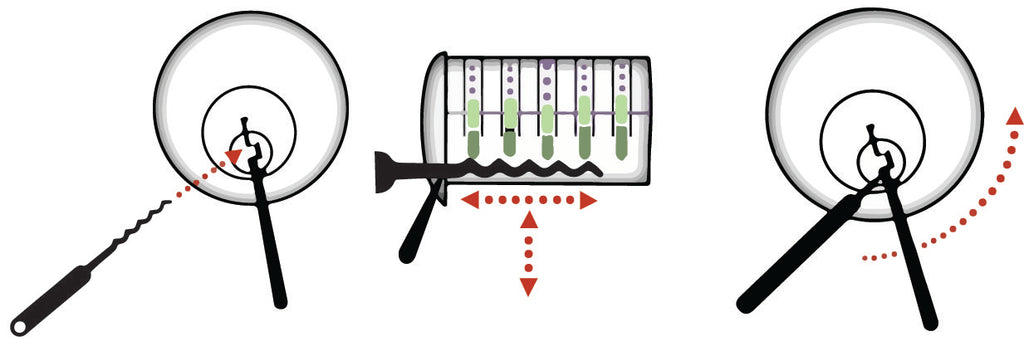
USING YOUR HOOK PICKS
Because of the tension you've created with your tension wrench, the binding pin will be stiffer and harder to lift than the other non-binding pins. So basically, you are just looking for a pin that is not loose!

Insert your hook type pick into the keyway and push it all the way to the back of the lock until you locate the rearmost pin. Very gently begin to raise each pin and gauge how it feels.
Continue to probe each pin until you find the pin that doesn't feel like the others and is more difficult to move. If you get to a point you cannot locate any binding pins you may have to release tension on your wrench, reset the lock and begin again.

Lock Picking Tips for Beginners
Learning lock picking takes patience. Many beginners improve quickly by following a few simple tips.
Start with simple locks. Basic padlocks often have fewer pins and fewer security features.
Use very light tension. Too much pressure can trap pins in place and make them impossible to set.
Move slowly. Lock picking is not about force. Gentle movements help you feel the pins binding.
Pay attention to feedback. Each lock provides subtle clicks and movements through the pick and tension wrench.
Practice regularly. Even a few minutes of practice helps build the sensitivity needed to recognize binding pins.
If your following all these steps but still can't seem to figure out how to pick a lock, try applying less, or more pressure with your tension wrench, it's the most common issue.
Don't forget to check out all of our EDC Lock Picking Tools.

Most Common Lock Picking Mistakes
Most people learning lock picking encounter the same common mistakes.
Too Much Tension
Applying excessive tension is the most common beginner problem. Too much pressure causes pins to bind so tightly that they cannot be manipulated by picks.
Oversetting Pins
If a pin is lifted too high, it may move above the shear line and become trapped. This prevents the lock from opening until the tension is released and the pins reset.
Moving Too Quickly
Fast movements make it difficult to detect which pin is binding. Slow, deliberate movements improve accuracy.
Ignoring the Direction of Rotation
Some locks rotate clockwise while others rotate counterclockwise. Applying tension in the wrong direction prevents the lock from opening.
Locks That Are Easier or Harder to Pick
Not all locks are equally difficult to pick.
Simpler locks with fewer pins are generally easier for beginners. Older padlocks or basic household locks are often good practice targets.
High security locks are significantly more difficult to pick. These may include features such as spool pins, sidebars, magnetic components, or electronic mechanisms.
Understanding these differences helps beginners choose locks that match their current skill level and allow them a chance to understand the proper techniques.
Practicing Lock Picking Safely
Knowing how to pick a lock is a valuable skill, but you must know the legality of it.
Responsible practice is an important part of learning lock picking.
Only practice on locks you own or have permission to open.
Many beginners use old padlocks or inexpensive practice locks when learning.
Transparent practice locks can help visualize how pins move inside the lock while you manipulate them.
You can damage locks you pick
Practicing on a variety of locks gradually builds the experience needed to handle more complex mechanisms.
Research local laws regarding the use, and possession of lock picks when out and about.
FAQ: Frequently Asked Questions about How to Pick a lock
Q: What is lock picking?
A: Lock picking is the process of opening a lock by manipulating the internal pins without using the original key. This is typically done using specialized tools such as lock picks and a tension wrench. The goal is to move each pin into the correct position so the lock cylinder can rotate and open.
Q. Is it legal to learn how to pick locks or to own lock picks?
A. In most places, owning lock-picking tools and learning how to pick locks is legal as long as you have permission to pick the lock. However, laws vary by location, so always check your local regulations before practicing.
Q: How does lock picking work?
A: Most residential locks use a pin tumbler mechanism. Inside the lock are pairs of pins that block the cylinder from turning until the correct key aligns them at the shear line. Lock picking works by applying light tension to the lock while lifting each pin to the correct height. When all pins align at the shear line, the cylinder can rotate and the lock opens.
Q. What tools do I need to pick a lock?
A. The most common tools for lock picking are:
- Tension wrench – applies rotational pressure to the lock.
- Hook picks – manipulate individual pins inside the lock.
- Rake picks – quickly move multiple pins at once for fast picking.
- Bump keys and bypass tools – alternative methods for opening certain locks.
Q: Can you pick a lock with a paperclip?
A: Absolutely. It is possible to improvise lock picking tools using paperclips or small pieces of wire. However, proper lock picks are designed to fit inside the lock and manipulate pins more precisely, making them much easier and more reliable to use.
Q. Can I practice lock picking without special tools?
A. Yes! While professional tools work best, you can practice with improvised picks made from bobby pins, paper clips, or feeler gauges. However, dedicated lock-picking tools provide better results and control.
Q: Is lock picking hard to learn?
A: Lock picking can be learned by beginners, but it takes practice. The most important skill is developing the ability to feel how the pins move inside the lock. Many beginners start with simple padlocks or practice locks before moving on to more complex locks.
Q. How long does it take to learn lock picking?
A. It depends on the lock and your skill level. Basic pin tumbler locks can be picked within minutes with practice, while high-security locks require advanced techniques and more experience.
Q: Why won’t my lock open when I try to pick it?
A: Several common issues can prevent a lock from opening. Too much tension may be applied to the lock, pins may be lifted too high and become overset, or tension may be applied in the wrong direction. Releasing tension slightly and starting again often allows the pins to reset.
Q: Why do people learn lock picking?
A: People learn lock picking for many reasons. Some are interested in understanding how locks work, while others enjoy it as a mechanical hobby or skill-building activity. Learning how locks function can also help people make better decisions about home and personal security.
Q. Is lock picking useful in survival and emergency situations?
A. Yes! Lock picking can be a valuable skill for urban survival, disaster preparedness, and security awareness. It can help in emergency access situations, such as retrieving locked supplies or securing shelter, but should always be used legally and ethically.
Q. What type of locks are easiest for beginners to pick?
A. Simple pin tumbler locks are the best for beginners. Practice locks with transparent housings allow you to see the pins moving as you pick, making it easier to learn the mechanics.
Q. Does lock picking damage the lock?
A. When done correctly, lock picking does not damage the lock. However, excessive force or improper techniques can cause wear over time, especially with raking or bumping methods, this is why having dedicated practice locks is essential.
Q. Where can I get high-quality lock-picking tools?
A. Grim Workshop offers compact, high-quality lock-picking tools designed for EDC, survival, and skill-building. Check out our collection at Grim Workshop for tools that fit in your wallet and are ready when you need them.
About Grim Workshop
At Grim Workshop, we believe that lock picking is an essential skill for preparedness, security awareness, and survival situations. Our Lock Pick Basics guide teaches the fundamentals of how locks work, the tools used in lock picking, and practical techniques for opening locks legally and ethically. Whether you're interested in learning for self-reliance, emergency situations, or locksmithing, this resource provides a solid foundation.
Please be sure to know local laws regarding the possession and use of lock picking tools in your area. A great place to start is with a quick internet search "Is lock picking legal in ( insert your states name here)".
And above all. Never pick a lock that is not yours.