

How to make a Frog Gig Pole or Frog Spear
Learn how to make a frog gig spear with this step-by-step DIY guide. Materials, tools, maintenance tips, and ethical harvesting practices for frog gigging.
Make your own Frog Gig

HOW TO MAKE A FROG GIG POLE OR FROG SPEAR
I can remember being a kid and my dad going out with his buddies frog-gigging. It seemed like every weekend, I'd see them load up and head out with their frog gig pole in hand. I was a little too young to join in with them back then. However, if we fast-forward to my middle school years, me and my good buddy Chris would spend any day we could fishing. Then at night we'd go frog-gigging. It was always such a blast. And, it's something that I still thoroughly enjoy doing.
→ Grim Master Tool and Skill Index

Types of Frog Gig Spears
Not all frog gig spears are the same, and different styles can change how you hunt. Here are the most common types you’ll come across:
Fixed Prong Gigs (Classic 3-Prong Barbed)
This is the traditional frog gig most people picture: a three-pronged spearhead with barbs on each tine. It’s simple, durable, and effective for most frog gigging situations. Some hunters prefer 2- or 4-prong setups, but the 3-prong barbed gig remains the standard.
Detachable or Harpoon-Style Gigs
These gigs are designed so the barbed head detaches from the pole when you strike, tethered by a short cord. This style works like a miniature harpoon, giving you extra security if a frog thrashes or if you’re gigging fish. They’re less common but very effective in deeper waters.
Compact or EDC Gigs
For survival kits and ultralight carry, compact gigs like Grim Workshop’s spear cards are a great option. These flat, credit-card or dog-tag sized spear points can be lashed to a pole in seconds, giving you a functional frog spear without carrying bulky gear. Perfect for backpacking, bug-out bags, or everyday carry setups.

How to Make a Frog Gig Pole
The biggest question that arises when you decide to go out for your first frog-gigging trip is, "how do I make a frog gig pole?" or "what frog gigging equipment do I need?" or even "What is a frog spear?".
Don't fret over this...
It's super simple to make a frog spear, in-expensive and requires very little gear. Also, you get to brush up on a few bushcraft skills in the process!
I'll teach you how to make your own frog spear down below...

Step 1: Gather your Materials
-
1. Frog Spear
We highly recommend our Gigging Spear Card or Surf & Turf Card. These stainless steel spear points are incredibly sharp, strong, and very effective at their intended task. -
2. A frog Gig Pole
I would recommend cutting a green sapling for your frog gig pole. For best results, cut it a foot or two taller than your head-to-toe height. You can always trim it to your preferred size later on, but you can't add more. -
3. Cordage
You'll need a way to tie everything together. Some simple No. 36 Bank Line or the Grim Cordage Card will be perfect for this. -
4. Knife
Any knife will do for this project. But I really like the Swiss Army Knife Farmer, which has a saw and blade on it for every task that this project requires.

Alternative Materials for DIY Builds
Don’t have a green sapling and bank line handy? No problem—frog spears can be built with a variety of materials, especially in a survival or DIY pinch.
-
Poles: Bamboo, PVC pipe, or aluminum tubing can all work as substitutes for a sapling. Bamboo is especially tough and lightweight.
-
Lashings: If you don’t have bank line, paracord, duct tape, zip ties, wire, or even natural cordage like bark strips or vines can be used to secure your spearhead.
-
Improvised Spear Points: While stainless steel spearheads are the most effective, you can also harden wooden tips over a fire or repurpose nails, wire, or scrap metal for a makeshift frog gig.
This flexibility makes the frog gig spear one of the most adaptable DIY hunting tools in the outdoors.

Step 2: Select your Frog Gig Pole (stick)
- • Green saplings work best for a frog gig pole.
Green wood is more durable and longer lasting than dead wood. Green wood will absorb shock better without snapping or splintering out prematurely ensuring your frog spear lasts a little longer. - • Make sure your frog gig pole is taller than you are from head-to-toe, with an additional 12-24 inches of height. This will give you some added reach around bodies of water and make things much more comfortable for you when using your frog spear.

Step 3: Prepare your frog gig pole
- • Baton your knife blade down the center of the frog gig pole about 3" deep. This is the slot where you will place your Frog Spears in the next step.
- • I recommend batoning WITH the grain of the wood. It only takes an extra second to check the grain direction...But it helps immensely when batoning & preparing pieces of wood for projects (or for firewood).
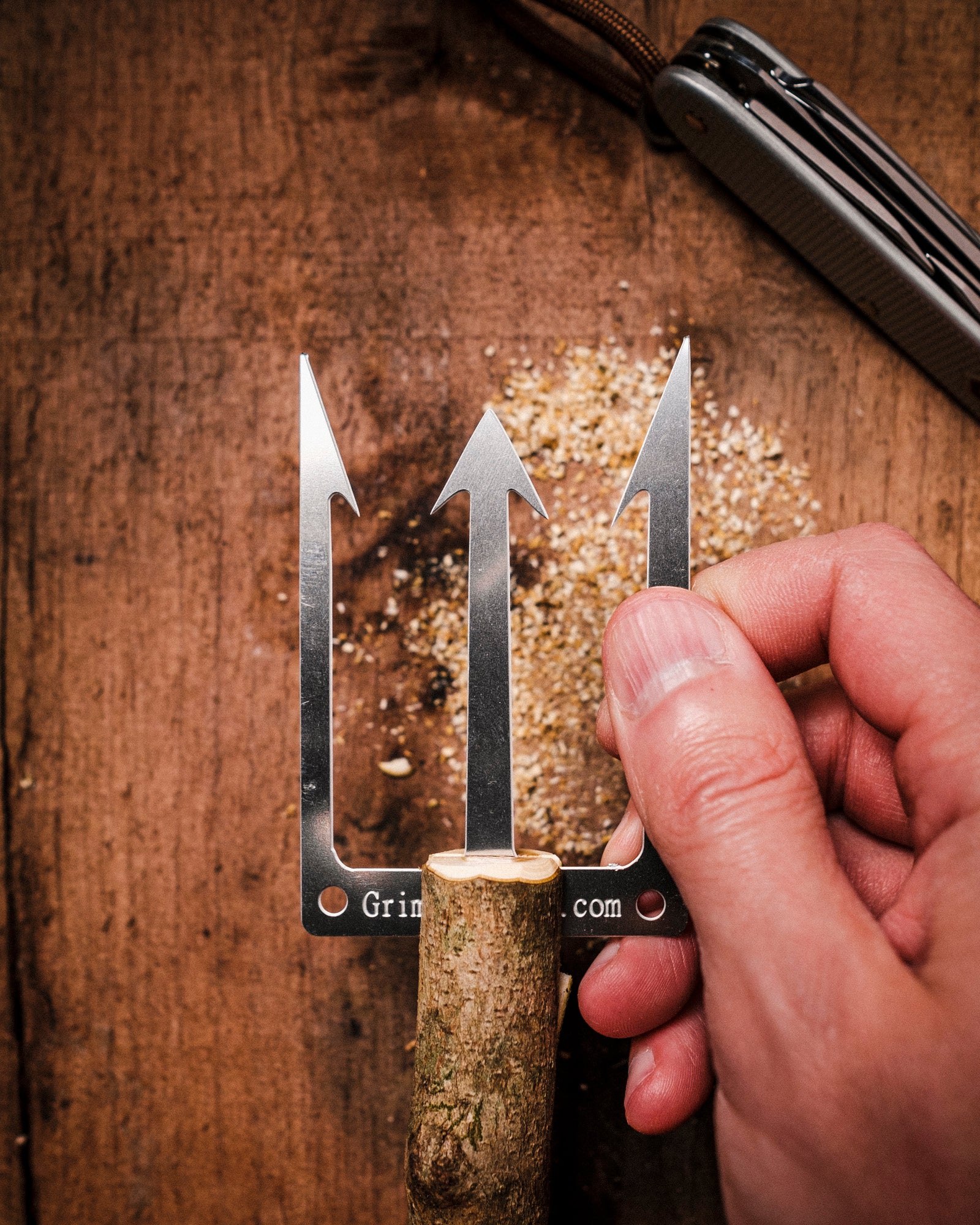
- • The last preparation you'll need for your frog gig pole to make is to "chamfer" the end of your pole like I'm doing in the photo above. 'Chamfer' is just a fancy word for rounding out the sharp corners of your stick. This will help prevent splitting and make your frog spear more durable.
Step 4: Attach your Frog Spear
- • Utilizing the slot that you batoned into your pole during Step 3, simply slide one of your Frog Spears into the slot. (Use caution to not gig yourself here)
- • Make sure your frog spear point is slid securely into the notch about 1" or a little further. Any less than 1" and you'll run the risk of it sliding out. Any more, you're losing length on your frog spear.

Step 5: Secure Everything
- • In this last step, you're going to take your Number 36 Bank Line and securely tie everything together on your frog gig pole.
- • Why Bankline?
Bankline is very grippy by nature and holds knots very well. It was also designed for use around water...So, it's a win/win! - • What type of knots?
You can get fancy here...But honestly, as long as it holds your gigging spears onto your frog gig pole, you're good to go. I personally just start out with a "clove hitch", then do some tight "wraps", and end with a second clove hitch.

And like that...Your Frog Gig pole is ready for action!
Making your own Frog Spear is a super simple project, taking only a few minutes to complete once you have your supplies gathered. Frog gigging, itself, is not only a super fun way to spend an evening by the water, but it is also a very worthwhile skill for procuring food in the outdoors.
For more information on how to gig a frog with your newly made frog spear check out the article HERE
Maintenance and Storage Tips
A well-maintained frog gig spear will last for years of use. Here are some simple ways to keep yours in top shape:
-
Sharpen the Barbs: Over time, barbs can dull. Use a small file or sharpening stone to keep points razor sharp.
-
Rinse and Dry: Always rinse your spearhead with fresh water after use, especially if you’ve been in muddy or brackish water. Dry it thoroughly to prevent rust.
-
Protect the Pole: Wooden poles will last longer if stored dry and occasionally sanded smooth to prevent splintering.
-
Retie Cordage: Bank line, paracord, or other lashings can loosen over time. Rewrap or replace lashings before each season.
-
Storage: For long-term storage, coat the spearhead lightly with oil and keep it in a dry place. Compact spear cards can be kept in a wallet, Altoids tin, or gear pouch without taking up any space.

About The Author
Based in the Appalachian Mountains, Anthony is a commercial photographer and avid outdoorsman. Whether he's setting up a scene for a photograph or getting things ready to camp, Anthony feels most at home with mud on his boots and a warm campfire burning nearby. Learn more at AnthonyAwaken.com
Frequently Asked Questions
Q. What is a frog gig spear?
A. A frog gig spear is a specialized multi-pronged spear designed for frog gigging—a method of hunting frogs using a sharp, barbed head attached to a long frog gig pole. It’s an effective tool for catching bullfrogs and small aquatic prey.
Q. What is the best length for a frog gig pole?
A. The ideal frog gig pole length depends on your environment. A 6 to 10-foot pole is best for wading in shallow water, while longer poles (12+ feet) allow for more reach from the shoreline or a boat. Telescopic or collapsible poles offer portability and easy storage.
Q. What materials are frog gig spears made from?
A. A high-quality frog gig spear is typically made from stainless steel or hardened metal for durability and corrosion resistance. The frog gig pole is often made from aluminum, fiberglass, or wood, providing lightweight strength for gigging.
Q. How do I attach a frog gig spear to a gigging pole?
A. Most frog gig spears attach to a gigging pole via a screw-on, clamp, or socket-style connection. Some models require bolts or zip ties for extra security, ensuring the gig stays firmly in place while in use, but there's several acceptable methods. As long as you have a way to not let the frog escape once it's speared, your good! Even harpoon style gigs that detatch from the spear tip can be used!
Q. What’s the best technique for using a frog gig spear?
A. The key to successful frog gigging is stealth and accuracy:
- Move slowly and quietly near water at night, using a flashlight or headlamp to locate frogs.
- Identify a target and position your frog gig pole carefully above the frog.
- Strike quickly and forcefully, ensuring the barbs penetrate fully to prevent the frog from escaping.
- Lift the gig smoothly to retrieve your catch.
Q. Can I use a frog spear for other purposes?
A. Yes! A frog spear can also be used for gigging fish, small game hunting, or even as a survival tool. Some outdoor enthusiasts carry detachable or collapsible frog gig spears in their EDC or survival kits.
Q. What is the best time for frog gigging?
A. Nighttime is the best time for frog gigging, as frogs are most active after dark. Using a bright flashlight or spotlight helps locate their reflective eyes, making them easier to target with a frog gig spear.
Q. Is frog gigging legal?
A. Laws vary by state and country, so check your local wildlife regulations before using a frog gig pole. Many areas require a fishing or hunting license and may have restrictions on season, size limits, and gear types.
Q. How do I maintain my frog gig spear?
A. To keep your frog spear in top condition:
- Rinse it with fresh water after each use, especially in saltwater environments.
- Sharpen the prongs periodically for better penetration.
- Store it dry to prevent rust and damage.
Q. Where can I buy a high-quality frog gig spear?
A. You can find frog gig spears, gigging poles, and other survival tools at Grim Workshop. We offer compact, high-quality gear designed for outdoor adventures, hunting, and survival. Check out our collection at GrimWorkshop.com.
Q. Can I make a frog gig spear without special tools?
A. Yes, a frog spear can be made with very basic tools. A sharp knife and cordage are enough to split a wooden pole and lash on a gig head. In a survival setting, you can even use duct tape, paracord, or natural fibers to secure the spearhead.
Q. What kind of wood makes the best frog gig pole?
A. Green hardwood saplings like oak, hickory, or ash are ideal because they’re strong, flexible, and less likely to snap. Bamboo is another excellent choice when available. Avoid dead or brittle wood that may break under pressure.
Q. What size frogs can you catch with a frog gig spear?
A. A standard frog gig spear can handle most species, from smaller green frogs to large bullfrogs. Larger barbed gigs are best for bullfrogs, while smaller prongs work well for smaller frogs and fish.
Q. Can you use a frog gig spear in saltwater?
A. Yes, but saltwater will corrode most metals quickly. If you plan to use a frog gig in brackish or saltwater, choose stainless steel spearheads and rinse them thoroughly with fresh water after each use.
Q. What’s the difference between a frog gig and a fish spear?
A. A frog gig usually has shorter, sharper prongs designed for soft-bodied targets like frogs. Fish spears often have longer or heavier-duty tines meant to penetrate scales and tougher skin. Many survival spearheads can function as both in a pinch.
Q. How do you safely carry a frog gig spear?
A. Always carry the spear with the prongs pointed downward and away from your body. Some giggers use protective covers, sheaths, or even wrap the spearhead in cloth during transport to avoid accidental injury.
Q. Do I need a partner for frog gigging with a spear?
A. While you can gig frogs alone, many hunters prefer going with a partner. One person shines the light to blind the frogs, while the other uses the spear. This teamwork often makes for a more successful and safer trip.
Legal Note and Ethical Harvest
Before you take your homemade frog spear out, always check your state’s wildlife regulations. Many areas require a fishing license, and some states set limits on frog species, size, and season. The American bullfrog is usually legal to harvest, but rules vary by location.
For ethical harvesting, always aim for a clean, humane strike to minimize suffering. Take only what you plan to eat, and avoid overharvesting local frog populations. A responsible gigging trip not only puts food on the table but also keeps the tradition alive for future generations.
Get More Survival Gear with Grim Workshop’s Subscription Box!
If you love frog gigging, outdoor survival, and EDC tools, you'll love the Grim Workshop Monthly Subscription Box! Each month, we send out exclusive gear, survival tools, and innovative EDC solutions to keep you prepared for anything. Sign up today at www.grimsurvival.com!